Successfully Added
The product is added to your quote.


The product is added to your quote.

Expect your quote in 5 minutes or less during business hours.
We'll get back to you within 5 minutes during business hours.
Check your email at email@gmail.com for our response
.
When automation equipment fails, the immediate assumption is often age, workload, or random electrical failure. In reality, many breakdowns begin years earlier due to environmental stress that quietly degrades components long before a fault code appears.
Heat, moisture, dust, vibration, and poor power quality slowly wear down drives, PLCs, HMIs, power supplies, and I O hardware. By the time a failure occurs, the damage is usually cumulative and irreversible.
Understanding how environmental conditions impact automation equipment is one of the most effective ways to extend asset life, reduce unplanned downtime, and avoid repeat failures.
Heat is consistently the most damaging environmental factor for industrial electronics. Most automation components are rated for a defined ambient temperature, but internal cabinet temperatures are often far higher than expected.
Reliability models commonly used in electronics engineering show that many components experience a sharp reduction in lifespan as operating temperature rises. Even modest temperature increases can dramatically accelerate internal wear.
Heat accelerates several failure mechanisms:
Electronic modules such as distributed I O and interface electronics are especially vulnerable. For example, a component like the Siemens 6ES7136-6DB00-0CA0 SIMATIC DP module may tolerate brief thermal spikes, but repeated overheating inside a cabinet can significantly shorten its usable life.
Heat damage is cumulative. Equipment often continues operating normally for months or years before a sudden failure appears without warning.
Moisture is deceptive because its effects are rarely immediate. High humidity and condensation quietly undermine electrical integrity over time.
Moisture exposure can cause:
Sensing and measurement components are particularly sensitive. A part such as the Siemens C71458-A6069-A1 voltage sensor may continue functioning while corrosion slowly develops, eventually leading to unstable readings or unexplained trips.
Condensation commonly occurs during temperature swings when warm air enters a cooler enclosure, especially in facilities without climate control or during frequent startup and shutdown cycles.
Factories generate airborne contaminants that gradually compromise automation equipment. Dust accumulation rarely causes immediate failure, but it steadily erodes reliability.
Dust and debris shorten equipment life by:
Fine particulates, oil mist, chemical vapors, and metallic dust are especially damaging. Over time, contamination inside enclosures increases the likelihood of faults in control and sensing hardware, including parts such as the Siemens A5E01135105 industrial component, which relies on clean electrical paths for stable operation.
Automation equipment is often mounted near rotating or reciprocating machinery that generates constant vibration. Mechanical stress gradually weakens electrical connections and internal joints.
Common vibration-related failure modes include:
Even rugged control hardware can suffer over time. Long-service components such as the Siemens 6DS1412-8CC Teleperm K-loop controller depend on proper mounting and vibration mitigation to reach their expected lifespan.
Vibration-related issues are notoriously difficult to diagnose because failures may only appear under specific operating conditions.
Environmental stress is not always physical. Electrical conditions play a major role in automation equipment longevity.
Common power quality issues include:
These conditions stress rectifiers, DC bus capacitors, power supplies, and control electronics. Damage often accumulates silently until a sudden, catastrophic failure occurs.
Environmental exposure does not stop when equipment is powered down.
Spare drives, PLCs, and electronic modules stored in uncontrolled environments can degrade before installation. Moisture absorption, capacitor aging, and corrosion can occur even when equipment appears unused.
This is why storage history matters when evaluating spare or replacement parts. A component may look clean while internal degradation is already underway.
One of the most costly mistakes plants make is replacing failed automation hardware without correcting the environmental conditions that caused the failure.
If heat, moisture, contamination, vibration, or power quality issues remain unresolved:
Environmental stress turns isolated failures into chronic reliability problems.
While no industrial environment can be made perfect, many risks can be significantly reduced.
These actions often cost far less than repeated emergency replacements.
Automation equipment rarely fails without cause. Environmental stress shortens lifespan quietly, long before alarms or faults appear.
By understanding how heat, moisture, contamination, vibration, and power quality affect industrial electronics, manufacturers can make smarter decisions about maintenance, storage, and replacement.
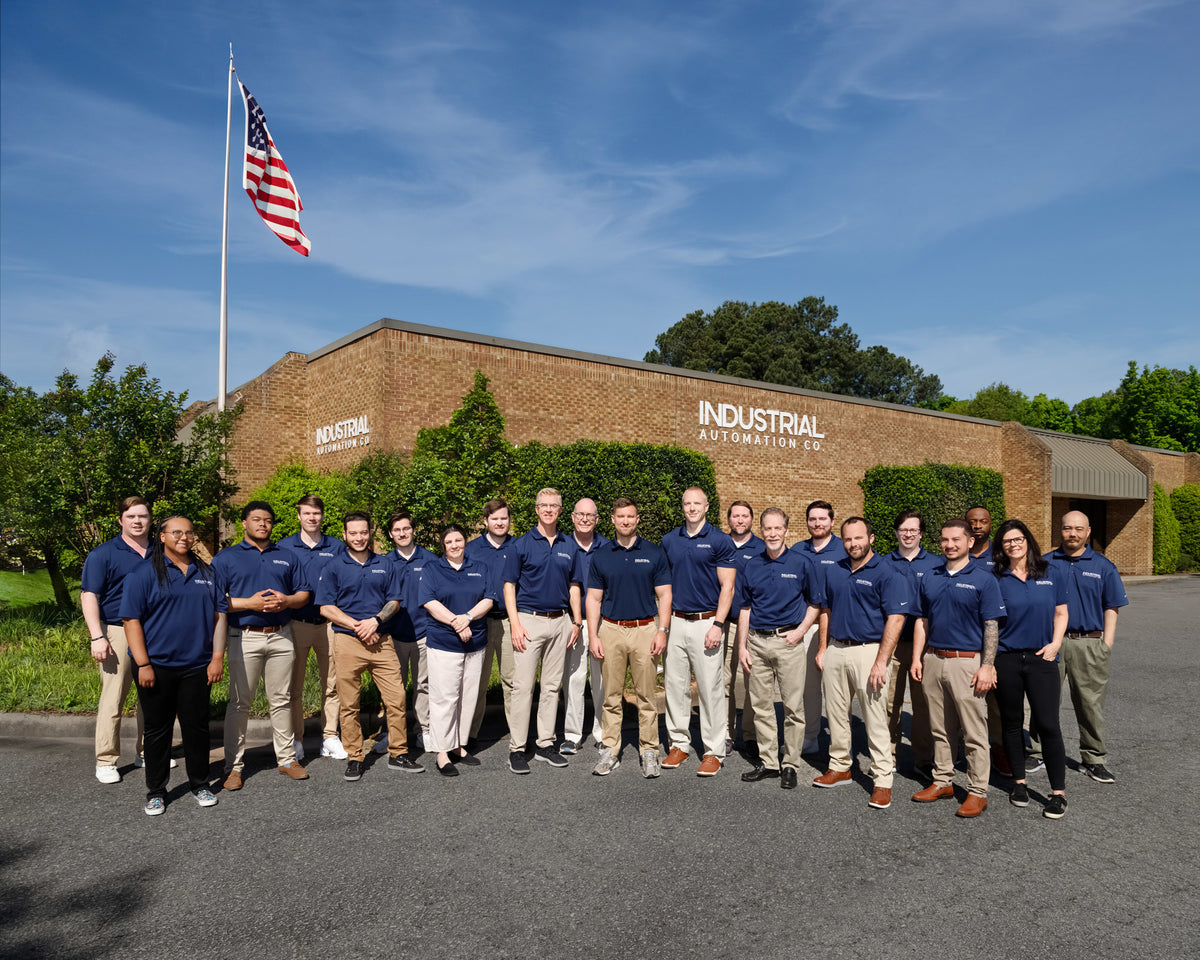
Industrial Automation Co. helps teams evaluate equipment condition, identify environmental risk factors, and reduce downtime caused by hidden stress.
Contact our team to discuss your application and reduce long-term reliability risk.
 2 Year Warranty on ALL products